Main Sequence Start
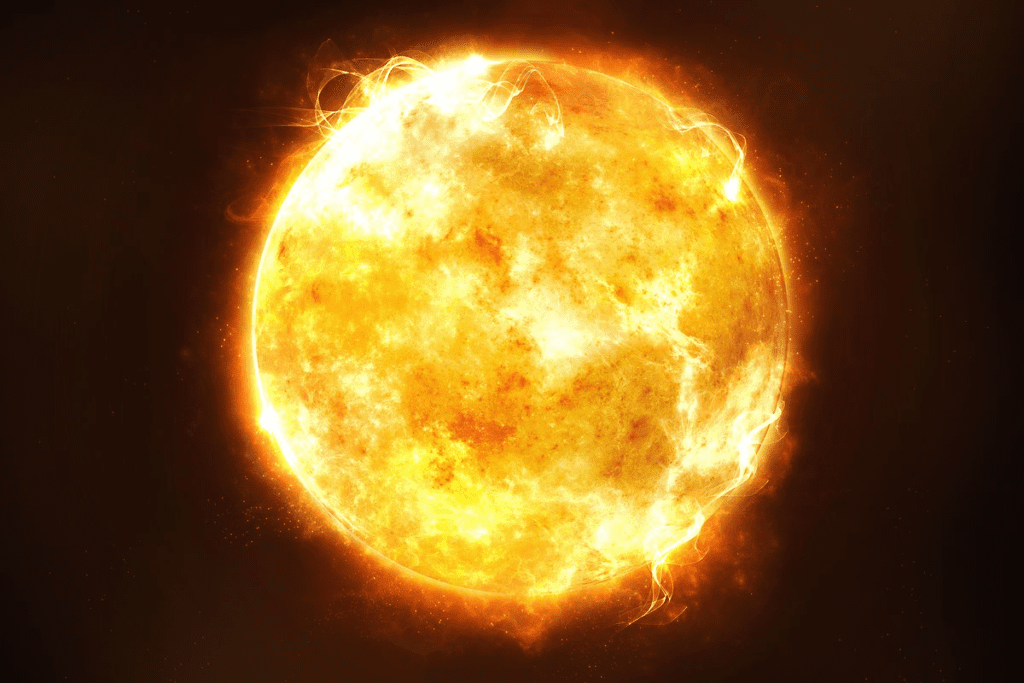
Once the center of the protostar reaches about 10 million Kelvin, nuclear fusion takes place. The nuclei of hydrogen atoms fuse to create helium, releasing energy in the form of light and heat. This is the start of the main sequence life of the star, during which the inward pull of gravity balances the pressure pushing outwards from fusion. The main sequence is the longest phase in the life of a star, occupying 90% or more of its life. The duration of the main sequence differs with the star's mass. The correlation between mass and longevity is exponential: a star 10 times more massive than the Sun might burn 10,000 times more brightly but live just 0.1% as long.
Classification
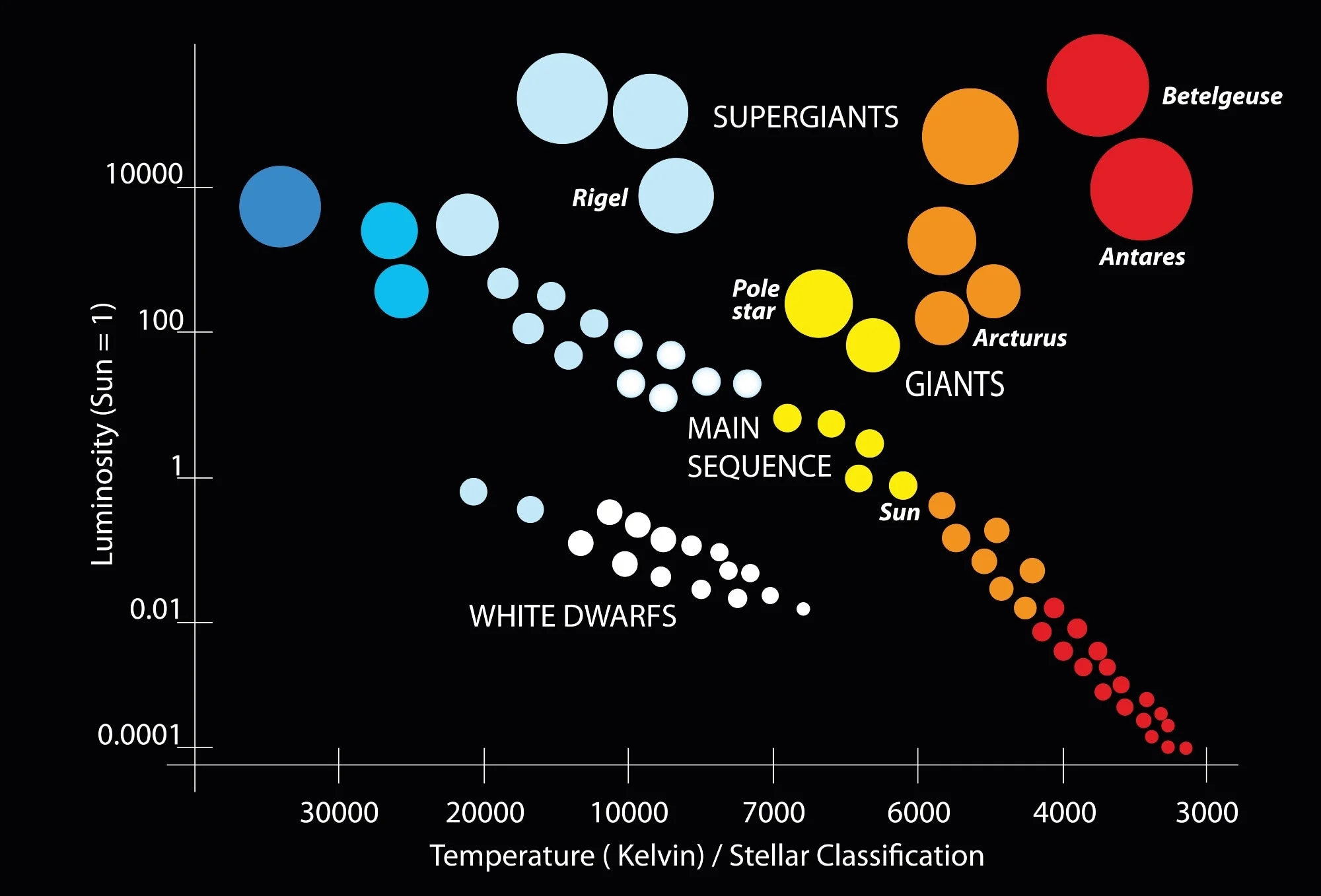
The main sequence is where stars are classified based on their type, ranging from hot blue O-type to cool red M-type stars. The Hertzsprung-Russell (H-R) diagram is very important when dealing with the study of stars. It plots stars' brightness against their temperature, with the main sequence being a diagonal line where the majority of stars are found. As a star depletes its core hydrogen, fusion decreases, and the core shrinks due to gravity. The compression heats up the surrounding hydrogen shell, making it fuse faster. The additional energy generated causes the star's outer layers to expand, signaling the transition to the post-main-sequence stage. The star's evolution now depends on the amount of mass it originally had.
Low Mass vs High Mass
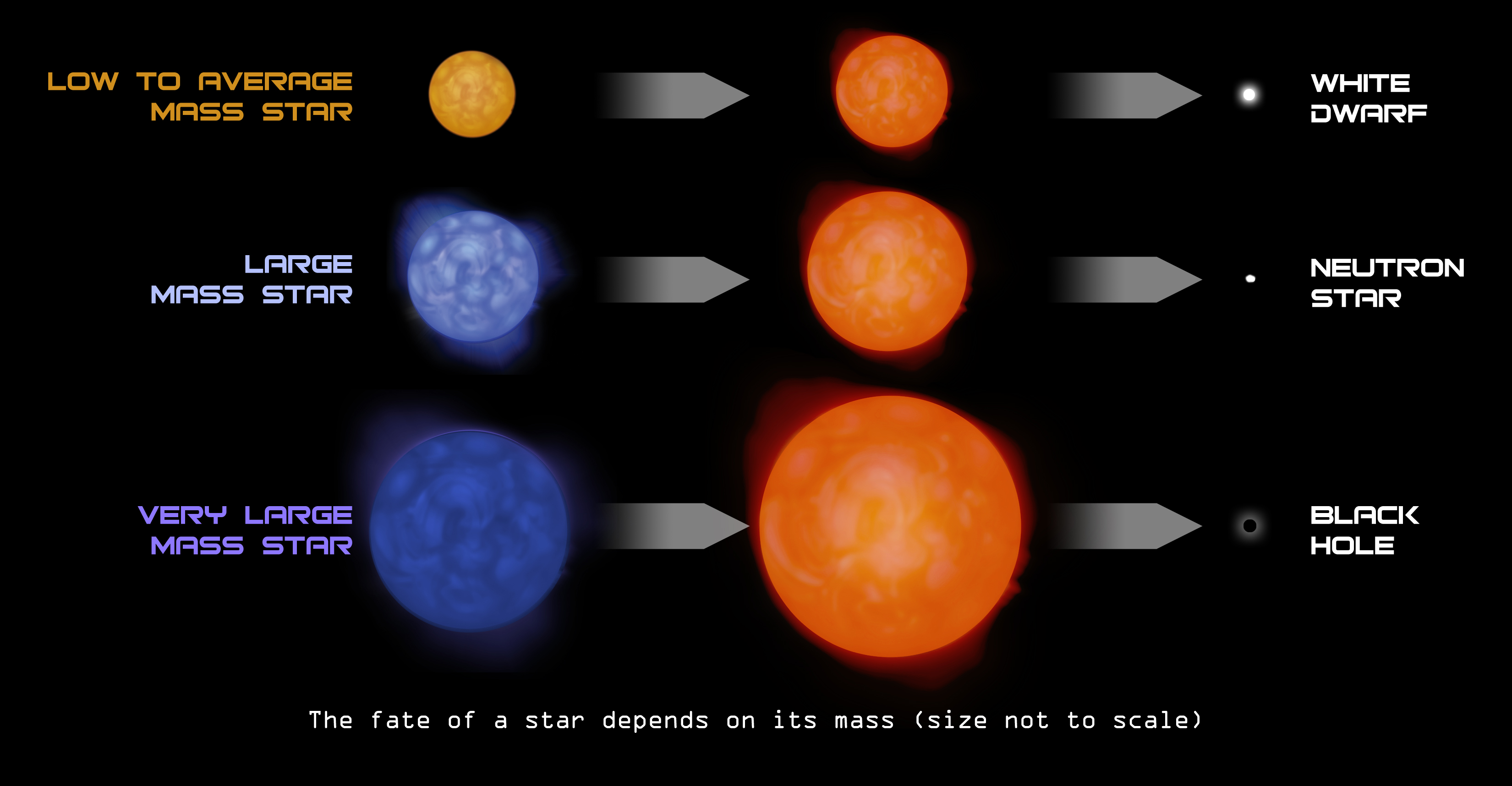
For low-mass stars such as the Sun, this stage transforms them into red giants. The outer layers cool and expand, causing the star to appear red, while its size can become 100 times larger. Although the surface is cooler, the red giant is much brighter due to its greater surface area. High-mass stars, on the other hand, become supergiants. Such big stars undergo multiple phases of fusion, burning heavier elements like carbon, oxygen, and silicon in their cores. Each fusion phase is short-lived and more energetic, ending with the creation of an iron core, which will not sustain fusion. Supergiants are some of the brightest objects in the universe but burn through their fuel quickly, so they do not live long.