Welcome to the
Star Cycle
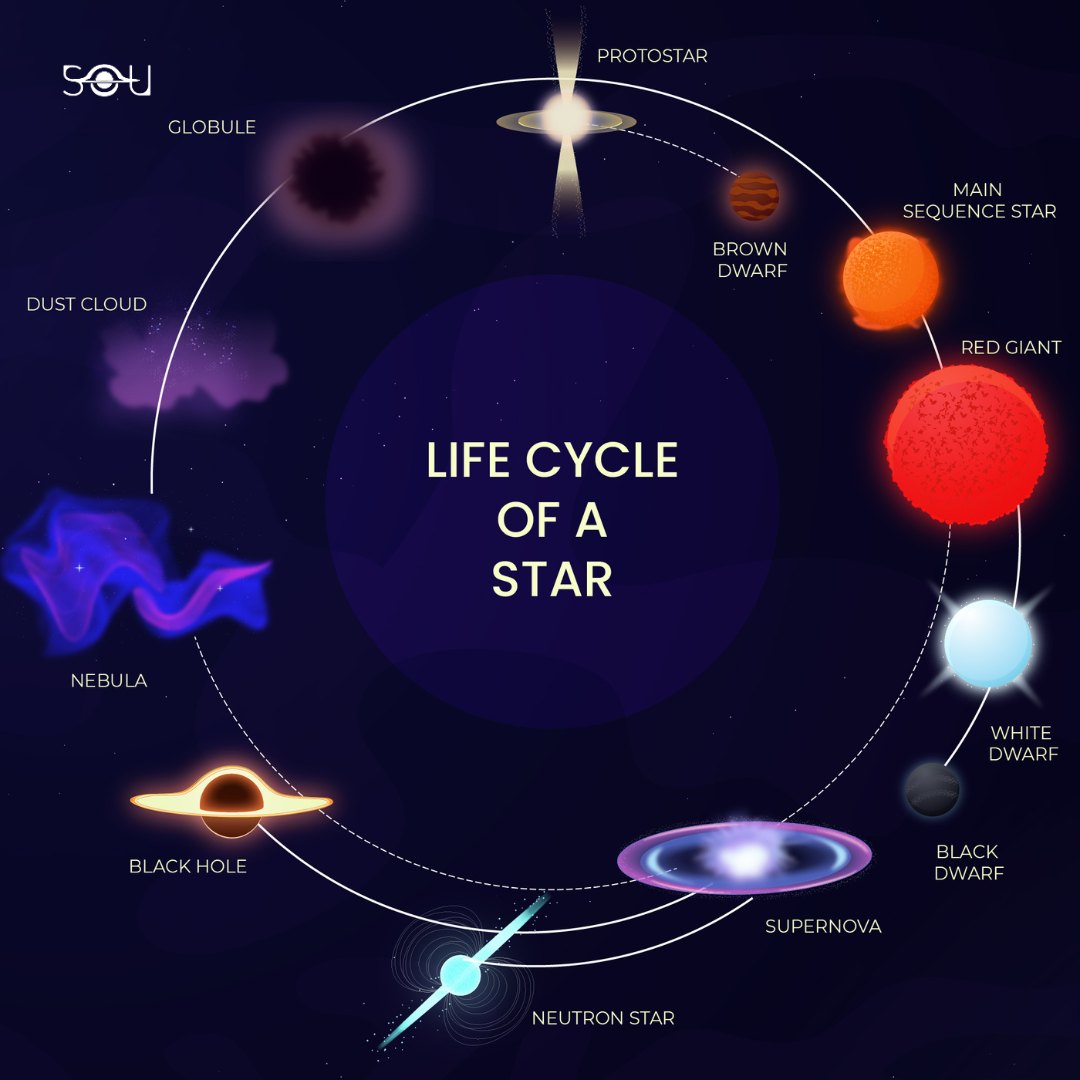
The universe is an enormous space full of light, interconnected by the birth and death of stars. The stars born in gas and dust clouds live for several million or billion years before they die, either in a huge explosion or gradually. The life of stars is regulated by gravity, nuclear fusion, and the change in heat, which play essential roles in the way the universe evolves. The star's life begins as a protostar within a nebula and concludes as a white dwarf, neutron star, or black hole. Each stage of this life cycle adds to the beauty and makeup of the universe. This essay discusses the different stages of the life cycle of a star, also known as the star cycle. It describes how stars form, how mass is important to them, and how they recycle material in the galaxies.